
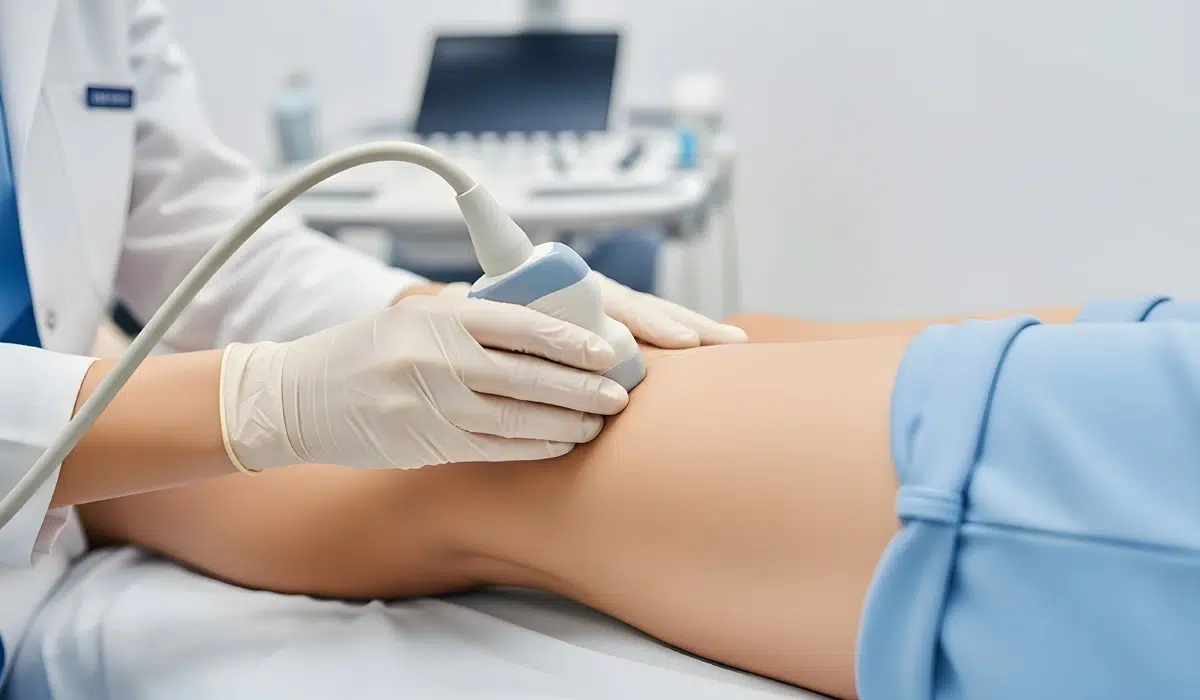
When your doctor orders a vascular ultrasound, you may have practical questions about how the test works and what to expect. East Bay Cardiovascular and Thoracic Associates, with accredited vascular labs in Danville, offers non-invasive vascular testing with experienced technologists and modern equipment.
Your Doctor Ordered a Vascular Ultrasound. Now What?
Preparing for a vascular ultrasound is generally straightforward. Most exams require no special fasting or medication changes, but your referring physician or our scheduling staff will tell you if any specific instructions apply. Bring a current list of medications, your photo ID, and relevant referral paperwork. Allow extra time for check-in if this is your first visit to our practice.
Preparing for a vascular ultrasound also includes wearing comfortable clothing that provides access to the area being examined, such as a loose shirt for a carotid ultrasound or shorts for a leg artery ultrasound.
Why is This Test Performed? Common Reasons for a Vascular Ultrasound
A vascular ultrasound is performed to investigate and monitor various vascular conditions. Your doctor may refer you for this non-invasive testing to:
- Investigate Specific Symptoms: This includes evaluating symptoms such as sudden or persistent leg pain during activity (claudication), nonhealing foot or toe wounds, dizziness or transient vision changes, or a pulsatile mass felt in the neck or abdomen.
- Diagnose or Monitor Vascular Conditions: Ultrasound helps identify and track conditions like peripheral artery disease (PAD), carotid artery stenosis (narrowing of neck arteries), deep vein thrombosis (DVT), and aneurysms (bulges in blood vessels).
- Assess Risk Factors and Disease Progression: For patients with risk factors such as diabetes, a history of smoking, high blood pressure, or high cholesterol, a vascular ultrasound can assess the presence and extent of vascular disease. It is also used to monitor known vascular disease or the status of prior vascular surgeries.
A Step-by-Step Guide to Your Ultrasound Appointment
Arrival and intake
A technologist will confirm your identity, review the exam indication, and record relevant medical history. Questions typically cover symptoms, prior vascular procedures, and current medications.
Positioning and preparation
You will lie on an exam table in a private room. For a carotid ultrasound, the head is slightly elevated and turned; for a leg artery study, you will be positioned supine with the leg accessible. The technologist applies a water-based gel to the skin to improve probe contact.
Image acquisition
The technologist moves the ultrasound probe across the target area, capturing gray-scale images of vessel walls and color and spectral Doppler data to measure flow direction and velocity. These measurements quantify narrowing (stenosis) and identify plaque, aneurysm size, or thrombus. The technologist documents representative images and Doppler waveforms for the interpreting physician.
Additional components
Some peripheral exams include segmental pressure measurements or treadmill/stress elements; the technologist will perform these if ordered. Depending on the study scope, the typical exam duration ranges from 30 to 60 minutes.
During the scan
The technologist may ask you to change positions briefly. The scan is non-invasive and painless; you may feel mild pressure from the probe.
The People and Technology Behind Your Results
Our team of registered vascular technologists performs scans in our accredited vascular lab in Danville. Registration reflects standardized training and competency in vascular ultrasound. We use high-resolution ultrasound equipment with color and spectral Doppler capabilities.
One of our board-certified vascular physicians or a radiologist reviews the images and prepares a written report that includes objective findings such as percent stenosis, plaque characteristics, aneurysm dimensions, or evidence of thrombus.
Your Next Step
Schedule an appointment or request information about our vascular ultrasound lab in Danville. Call East Bay Cardiovascular and Thoracic Associates at our Danville, Concord, or Pleasanton office to discuss which study—carotid ultrasound, leg artery ultrasound, or other non-invasive vascular testing—is appropriate for your clinical situation.
